
5 Best Educational Toys That Make Learning Fun
Introduction
Every parent wants their child to learn, grow, and develop new skills. But learning does not always have to happen through books and classroom activities. Sometimes, the best learning experiences begin with play!
The best educational toys for kids combine fun with opportunities to develop creativity, imagination, communication, and problem-solving skills. From colourful building blocks to interactive books, the right toys can make everyday playtime more meaningful.
At Pip & Pop, we believe that toys are more than just a source of entertainment. They can inspire curiosity and help children explore the world around them.
1. Building Blocks
Building blocks are excellent toys for encouraging creativity and logical thinking. Children can build towers, houses, bridges, and anything their imagination allows.
These toys also introduce basic concepts such as shapes, colours, counting, and balance. Parents can join the fun by challenging children to build the tallest tower or create a house for their favourite toy.
2. Educational Puzzles
Puzzles help children recognise shapes, identify patterns, and practise problem-solving. Completing a puzzle also encourages patience and persistence.
Choose puzzles according to your child’s age and interests. Animal, alphabet, number, and picture puzzles can make learning more engaging.
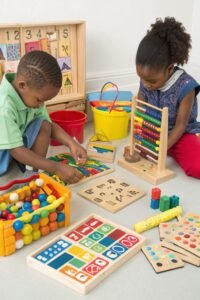
3. Art and Craft Toys
Drawing, colouring, and crafting allow children to express themselves creatively. These activities provide opportunities to practise hand movements, make decisions, and explore different colours and materials.
Parents can encourage children to create greeting cards, draw imaginary animals, or make simple paper crafts using age-appropriate supplies.
4. Interactive Books
Interactive books make reading more engaging through colourful illustrations, questions, activities, and hands-on features.
Reading together can introduce new vocabulary, encourage conversations, and develop an interest in stories. Parents can ask questions about characters and invite children to predict what might happen next.
5. Pretend-Play Toys
Pretend-play toys allow children to explore everyday experiences through imagination. Play kitchens, toy animals, dolls, and doctor sets can inspire creative storytelling.
Role-playing also gives children opportunities to practise communication, cooperation, and decision-making.
How to Choose the Right Educational Toys
When choosing educational toys, consider your child’s age, interests, abilities, and safety. Look for durable, age-appropriate products that encourage exploration rather than limiting children to one activity.
Remember, expensive toys are not always better. Simple toys can provide meaningful learning experiences when children have the freedom to explore them.
Conclusion
Educational toys can turn ordinary playtime into an opportunity for discovery. Building blocks, puzzles, art supplies, interactive books, and pretend-play toys each offer different ways for children to explore and develop skills.
At Pip & Pop, we believe every child deserves playful opportunities to learn, imagine, and grow.
Explore Pip & Pop and discover toys that make learning fun!
1. Building Blocks
Building blocks are excellent toys for encouraging creativity and logical thinking. Children can build towers, houses, bridges, and anything their imagination allows.
These toys also introduce basic concepts such as shapes, colours, counting, and balance. Parents can join the fun by challenging children to build the tallest tower or create a house for their favourite toy.
2. Educational Puzzles
Puzzles help children recognise shapes, identify patterns, and practise problem-solving. Completing a puzzle also encourages patience and persistence.
Choose puzzles according to your child’s age and interests. Animal, alphabet, number, and picture puzzles can make learning more engaging.
4. Interactive Books
Interactive books make reading more engaging through colourful illustrations, questions, activities, and hands-on features.
Reading together can introduce new vocabulary, encourage conversations, and develop an interest in stories. Parents can ask questions about characters and invite children to predict what might happen next.
5. Pretend-Play Toys
Pretend-play toys allow children to explore everyday experiences through imagination. Play kitchens, toy animals, dolls, and doctor sets can inspire creative storytelling.
Role-playing also gives children opportunities to practise communication, cooperation, and decision-making.
How to Choose the Right Educational Toys
When choosing educational toys, consider your child’s age, interests, abilities, and safety. Look for durable, age-appropriate products that encourage exploration rather than limiting children to one activity.
Remember, expensive toys are not always better. Simple toys can provide meaningful learning experiences when children have the freedom to explore them.