Little Stories, Big Imaginations and Beautiful Memories
Introduction: Every Child Has a Story to Tell
Childhood is a world filled with curiosity, imagination, laughter, and endless possibilities. A cardboard box can become a spaceship, a teddy bear can become a child’s closest companion, and a simple afternoon can turn into an unforgettable adventure. For children, even the smallest things can hold the biggest stories.
At Pip & Pop, we believe that toys and stories are more than sources of entertainment. They can inspire children to imagine new worlds, explore their creativity, learn valuable lessons, and create beautiful memories with the people they love.
Welcome to Pip & Pop Stories, a special place where little imaginations can grow through heartwarming tales, playful adventures, meaningful lessons, and family-friendly activities.
Whether you are a parent searching for bedtime stories, a caregiver looking for creative activities, or someone who wants to make playtime more meaningful, Pip & Pop Stories brings together ideas that celebrate the magic of childhood.
In this blog, we will explore why stories matter, how storytelling and toys can complement one another, and how families can create memorable experiences through simple everyday moments.
What Are Pip & Pop Stories?
Pip & Pop Stories is a storytelling concept created to celebrate the joy of childhood through imagination, creativity, and meaningful play.
Children naturally enjoy stories about friendship, adventure, kindness, animals, magical places, and everyday experiences. These stories can entertain young readers while giving parents opportunities to talk about feelings, relationships, and important life lessons.
The Pip & Pop Stories section can feature different types of content, including:
– Bedtime stories: Gentle tales that families can enjoy together before sleeping.
– Moral stories: Simple stories about kindness, honesty, patience, sharing, and respect.
– Friendship stories: Adventures that explore cooperation, understanding, and helping others.
– Learning stories: Engaging tales that introduce numbers, colours, animals, nature, and everyday concepts.
– Toy-inspired adventures: Imaginative stories featuring teddy bears, action figures, toy cars, puzzles, and other favourite playthings.
– Family stories: Heartwarming moments that celebrate parent-child relationships and family connections.
– Creative play ideas: Activities that encourage children to turn stories into drawings, games, crafts, and imaginative adventures.
Every story offers an opportunity to discover something new. Sometimes the lesson may be about helping a friend. At other times, the greatest takeaway may simply be the joy of imagining something wonderful.

Why Are Stories Important for Children?
Stories have been part of childhood for generations. From traditional bedtime tales to modern picture books, storytelling gives children opportunities to explore ideas, emotions, characters, and situations in an engaging way.
Here are some reasons why stories can be a valuable part of a child’s routine.
1. Stories Encourage Imagination
When children listen to or read a story, they begin to picture characters, places, and events in their minds.
A story about a little rabbit travelling through a magical forest might inspire a child to draw trees, create animal characters, or build a forest using toy blocks.
This imaginative process encourages children to explore possibilities beyond their everyday surroundings.
Parents can support this by asking questions such as, “What do you think happens next?” or “If you were in this story, where would you go?”
There is no need for every answer to be correct. The goal is to give children space to imagine and express their ideas.
2. Stories Introduce New Words and Ideas
Reading stories together exposes children to words, descriptions, conversations, and experiences they may not encounter in everyday life.
A story about the ocean might introduce words such as waves, shells, coral, and underwater. A story about friendship might create opportunities to discuss sharing, kindness, and helping others.
Parents can explain unfamiliar words, talk about the pictures, and connect the story to real-life experiences.
Over time, enjoyable reading experiences can help children develop an interest in books and language.
3. Stories Help Children Explore Emotions
Children experience a wide range of emotions as they grow. Stories can provide a gentle way to explore feelings such as happiness, disappointment, excitement, fear, and frustration.
For example, a character who feels nervous about making a new friend can create an opportunity to talk about starting school or meeting unfamiliar people.
Parents can ask, “How do you think the character feels?” or “What might help them feel better?”
These conversations can encourage children to recognise emotions and consider different perspectives. Stories should complement, rather than replace, supportive conversations about a child’s real experiences.
4. Stories Encourage Curiosity
Children are naturally curious about the world. Stories about animals, nature, space, machines, and different communities can inspire questions and further exploration.
A story about butterflies might encourage a child to observe insects in a garden. A tale about space might inspire a drawing of planets and stars.
This is one way storytelling can lead to learning experiences beyond the page.
5. Stories Create Opportunities for Family Bonding
Reading together provides families with time to slow down, talk, laugh, and share an experience.
Even a short story can become a special routine when parents give children their attention and invite them to participate.
Children might choose a favourite book, invent a new ending, or tell a story of their own.
These small moments can become cherished family memories.
The Magic of Toys and Storytelling
Toys and stories work beautifully together because both encourage children to explore ideas through play.
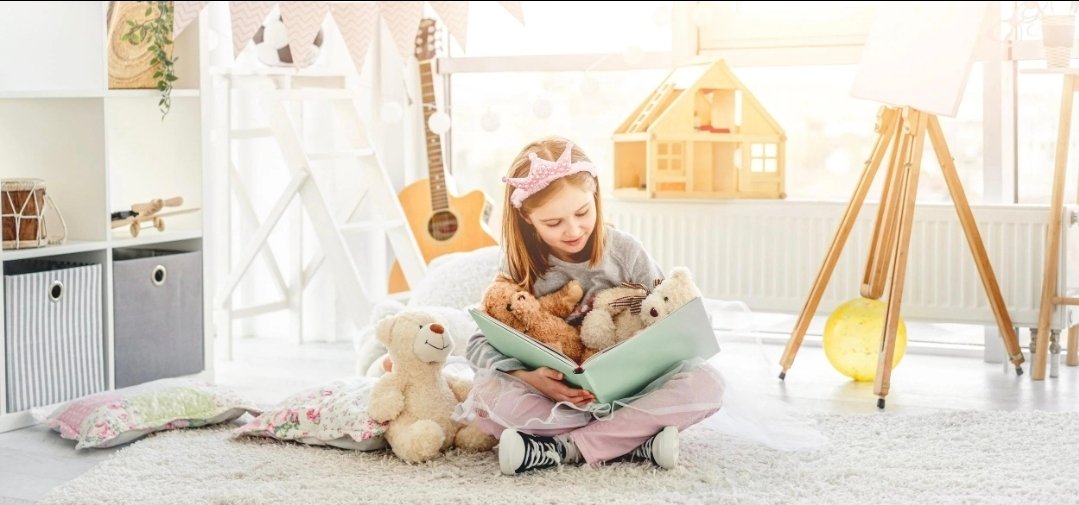
A teddy bear can become the hero of a bedtime adventure. Toy cars can travel through an imaginary city. Building blocks can become a castle where a brave character lives.
By combining storytelling with suitable toys, parents can give children new ways to participate in stories rather than simply listening to them.
Turn a Favourite Toy into a Story Character
Invite your child to choose a favourite toy. It could be a teddy bear, doll, action figure, toy animal, or vehicle.
Ask your child to imagine a name, personality, and adventure for the character.
For example, a small teddy bear named Pip might want to find a missing star. Along the way, Pip meets helpful friends who work together to solve the problem.
Your child can use other toys to represent the characters and settings.
This activity encourages imaginative storytelling and gives children opportunities to develop their own ideas.
Build a Story World with Blocks
Building blocks can become an imaginary village, a castle, a school, or an entire city.
Invite your child to construct the setting for a story. Once the structure is ready, introduce a simple challenge.
Perhaps a toy animal needs to cross a bridge, or a little character must find a safe place during a pretend storm.
Encourage your child to decide what happens next.
The activity combines construction, imagination, and storytelling in a flexible, enjoyable way.
Create Stories with Interactive Books
Interactive books can make reading more participatory through illustrations, questions, matching activities, and age-appropriate hands-on features.
Pause during reading and ask children to identify objects, predict events, or describe what they notice.
After finishing the book, encourage them to recreate a favourite scene using drawings, toys, or simple crafts.
Choose books and activities suited to the child’s age, abilities, and interests.
Fun Pip & Pop Stories Activities for Families
You do not need an elaborate setup to create a meaningful storytelling experience. Simple activities can help children explore their imagination at home.
1. The Bedtime Story Adventure
Choose a comfortable place and invite your child to select a favourite story.
Read slowly, use different voices when appropriate, and pause to discuss the characters.
At the end, ask your child which part they liked most or what they would change about the ending.
This can become a relaxing family routine that encourages an enjoyable relationship with books.
2. Make Your Own Storybook
Give your child paper, crayons, and other suitable art materials.
Ask them to create a character, draw a setting, and invent a simple adventure. You can help write down their words if needed.
Join the pages together to make a handmade storybook.
Children can revisit their creations, add new adventures, or share the book with family members.
3. The Mystery Toy Story
Place a few familiar toys in a bag or box. Let your child select one without planning the entire story in advance.
Ask questions such as:
– Who is this character?
– Where are they going?
– What problem do they need to solve?
– Who could help them?
Use the answers to create a story together.
There is no single correct outcome, which makes the activity suitable for exploring different ideas.
4. The Kindness Challenge
Create a short story about a character who notices someone needing help.
Perhaps a toy rabbit has lost its way, or a toy bear feels left out during a game.
Invite your child to think about what the other characters could do.
After the story, discuss small acts of kindness your family can practise in everyday life, such as sharing, helping tidy up, or checking whether someone needs support.
5. Draw What Happens Next
Read a short story and stop before the ending.
Ask your child to draw what they think might happen next. Then finish the story and compare the different ideas.
This activity encourages imagination and gives children a chance to express their thoughts visually.
The child’s ending does not need to match the original. Inventing alternatives is part of the fun.
Screen-Free Play and the Power of Imagination
Digital devices are a part of modern family life, but children also need opportunities to engage with physical objects, books, movement, and face-to-face interaction.
Screen-free activities can provide alternatives during suitable parts of the day.
Storytelling, puzzles, building blocks, art and craft projects, and pretend play allow children to participate actively in what they are doing.
For example, after reading a story about animals, a child might arrange toy animals into a pretend jungle. After a tale about a magical garden, they might draw flowers or create a garden using blocks.
These activities can help families extend a story into a hands-on experience.
The aim is not to make every moment educational or to eliminate technology completely. Instead, families can offer a variety of experiences that balance screen use with reading, movement, imaginative play, rest, and social interaction.
Pip & Pop Stories celebrates the simple pleasure of discovering something new through stories and play.
How Parents Can Make Storytime Special
The way parents participate can make storytelling more engaging and meaningful.
Let Your Child Choose
Whenever possible, offer a choice of stories based on the child’s interests.
Some children enjoy animals, while others prefer adventure, friendship, vehicles, or magical characters.
Following their interests can make reading feel more inviting.
Ask Questions Without Turning Reading into a Test
Questions can help children participate, but avoid interrupting every few sentences.
Give them time to listen and enjoy the story. Pause naturally to discuss an interesting character or event.
Encourage Their Own Ideas
If a child invents an unexpected ending, encourage them to explain it.
You can ask, “What made you think of that?” or “What happens to the character after that?”
There is no need to correct every imaginative detail.
Repeat Favourite Stories
Children often enjoy hearing the same story more than once.
Familiar stories allow them to recognise details, anticipate events, and participate in telling parts of the story.
Repeating a favourite book can be just as valuable as introducing a new one.
Keep the Experience Relaxed
Storytime should be enjoyable rather than another task on a busy schedule.
Choose a time and setting that work for your family. Some children enjoy bedtime reading, while others prefer stories during the afternoon or as part of quiet play.
A short, happy reading experience is better than forcing a long session when a child is tired or distracted.
The Pip & Pop Philosophy: More Than Toys, More Than Play
At Pip & Pop, we believe that childhood deserves moments filled with curiosity, creativity, laughter, and connection.
Toys can become companions in imaginary adventures. Books can open doors to new worlds. Simple games can bring family members together.
Our goal is to celebrate the possibilities that emerge when children have opportunities to explore and enjoy meaningful play.
We also believe that play can be an opportunity to encourage kindness and consideration for others. Pip & Pop’s commitment to donating 7% of every purchase towards children’s education reflects the idea that small actions can contribute to something meaningful beyond the playroom.
By bringing together toys, stories, and thoughtful messages, Pip & Pop aims to celebrate not only the fun of childhood but also the values families want to nurture as children grow.
Every family has its own traditions, favourite games, and special memories. Our hope is that Pip & Pop Stories will inspire even more of those moments.
Frequently Asked Questions About Pip & Pop Stories
1. What are Pip & Pop Stories?
Pip & Pop Stories is a storytelling concept for children and families, featuring imaginative tales, meaningful lessons, creative activities, and ideas that celebrate learning through play.
2. Why are stories important for children?
Stories can introduce new vocabulary, encourage imagination, provide opportunities to explore emotions, and inspire curiosity. Reading together can also create opportunities for family interaction.
3. What types of stories can children enjoy?
Children may enjoy bedtime stories, animal adventures, friendship tales, moral stories, fantasy adventures, and stories inspired by everyday experiences. The best choices depend on their age and interests.
4. How can toys be used for storytelling?
Children can use toys as characters, build settings with blocks, create adventures with toy animals, or recreate scenes from a favourite book. These activities offer flexible ways to explore imagination.
5. How can parents encourage screen-free play?
Parents can offer books, puzzles, art supplies, building blocks, and pretend-play toys. Participating in an activity together can also encourage children to explore options beyond screens.
6. How often should parents read stories to their children?
Families can read together as often as their routines allow. Even a short, enjoyable reading session can help establish a positive habit. Choose books appropriate for the child’s age and interests.
7. Can stories teach children good values?
Stories can introduce ideas such as kindness, honesty, patience, cooperation, and respect. Parents can help children explore these ideas through gentle conversations and everyday examples.
Conclusion: Let Every Little Story Begin a Big Adventure
Every childhood is made up of little moments: a favourite toy tucked into bed, a story shared before sleeping, a tower built together, or an imaginary adventure invented on a rainy afternoon.
These moments may seem ordinary, but they can become meaningful memories that families treasure.
Through Pip & Pop Stories, we celebrate the magic of imagination and the opportunities that stories and play can create. From heartwarming tales and creative activities to lessons about friendship and kindness, each story can offer families a new way to connect.
You do not need a perfect story, an expensive toy, or an elaborate activity to make playtime special. Sometimes, all it takes is a curious child, a favourite toy, and someone willing to join the adventure.
At Pip & Pop, we believe in meaningful screen-free play, imaginative discoveries, and the happiness that comes from growing together.
Ready to make playtime more meaningful? Explore Pip & Pop’s collection of toys, books, and playful discoveries, and let your family’s next little adventure begin.
Pip & Pop — Little Stories, Big Imaginations, Beautiful Memories.